Lord Ram
"Wherever dharma is upheld, wherever love and duty walk together — there is Ram."
Who is Lord Ram?
Lord Ram, the seventh avatar of Lord Vishnu, is revered as Maryada Purushottam — the highest example of virtue, discipline, and righteous living. Born in Ayodhya as the son of King Dasharatha and Queen Kaushalya, He lived as the ideal son, devoted husband, loyal brother, noble warrior, and just king. His life reflects the true meaning of Dharma, where truth, duty, compassion, and moral strength guide every action. Through His calmness, sacrifice, and unwavering commitment to righteousness, Lord Ram continues to inspire devotees to live with honour, balance, and inner courage.
In Maharashtra’s devotional culture, Lord Ram holds a deeply respected place through the living tradition of the Ramayana, Bhajan, Kirtan, Pravachan, and saintly literature. His name is remembered as a source of strength, peace, and moral clarity, while His journey offers timeless lessons on duty, sacrifice, love, and leadership. From the devotion of Hanuman to the ideals of Ram Rajya, the story of Ram continues to guide hearts across generations. At Swarseva, His presence is celebrated through Ram-Rasa — devotional storytelling that brings His calmness, courage, and compassion alive.
"Ram is not merely a king of Ayodhya. He is the eternal principle of righteousness living in every heart that chooses duty over desire."
— Maharashtra Bhakti TraditionThe Ramayana
The eternal story of Ram — love, duty, sacrifice and triumph of dharma
In the radiant city of Ayodhya, Lord Ram was born as the eldest son of King Dasharatha and Queen Kaushalya, bringing hope and righteousness into the world. Loved for His calm nature and devotion to Dharma, He was chosen to be king, but destiny led Him into fourteen years of exile. To honour His father’s word, Ram left the palace with Sita and Lakshman, choosing duty over desire.
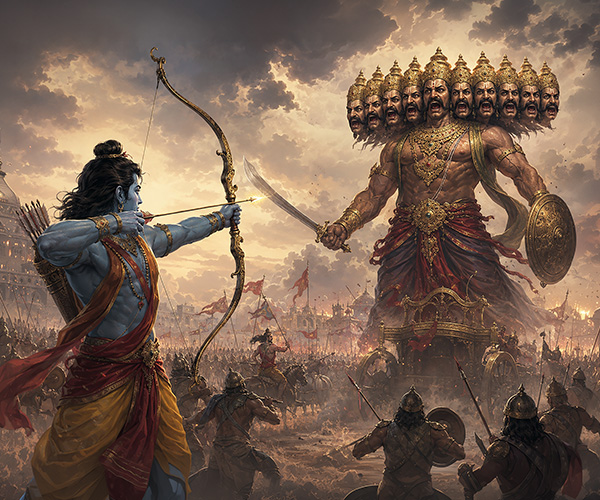
In the forest, Ravana abducted Sita and took her to Lanka. Heartbroken yet resolute, Ram began His search and found a devoted ally in Hanuman. With Hanuman’s courage and the strength of the Vanara sena, Ram crossed the ocean and fought the great battle of Lanka. Ravana was defeated, Sita was rescued, and truth triumphed over arrogance. After fourteen years, Ram returned to Ayodhya, where the people welcomed Him with rows of glowing lamps — the joyous moment remembered as Diwali.
3 Teachings of Lord Ram
The dharmic principles that Ram lived and embodied
Lord Ram teaches the power of keeping one’s word, no matter the personal cost. His life reminds us that true honour comes from integrity. When our words and actions remain aligned, we build trust, respect, and a reputation rooted in sincerity and responsibility.
Lord Ram remained steady whether He was offered a kingdom or sent into exile. His calmness teaches us to stay balanced in both success and struggle. When the mind is anchored in Dharma, life’s joys and sorrows do not overpower our inner peace.
Lord Ram’s greatness lies not only in His strength, but also in His compassion. He showed respect even towards enemies and kindness towards those forgotten by society. His teaching reminds us that true righteousness is incomplete without empathy, forgiveness, and a gentle heart.
4 Sacred Stories
Beloved tales from the life of Lord Ram
During the great quest to rescue Mata Sita, Lord Ram and his monkey army faced an enormous task: building a bridge to Lanka. Mighty warriors like Hanuman and Angad worked hard, lifting massive boulders and uprooting trees. Among all this strong effort, a tiny squirrel wanted to help. It rolled in the dry sand on the beach and then hurried to the bridge, shaking the sand from its fur into the gaps between the big stones.
Seeing this, the monkeys laughed at the squirrel’s small efforts. But Lord Ram gently picked up the little creature and silenced the laughter of his army. He explained that while the big boulders formed the bridge, the squirrel's sand was vital, holding everything together. With love, Ram stroked the squirrel’s back, leaving three white stripes as a mark of gratitude for its contribution.
Moral: In every big project, even the smallest efforts play a crucial role. Every sincere contribution deserves respect.
Deep in the Dandakaranya forest, an elderly woman named Shabari lived simply and devotedly in her ashram. She patiently awaited the arrival of Lord Ram, holding on to her guru's promise that he would visit her one day. When Ram and Lakshman finally arrived, Shabari was filled with joy.
Excited to serve her guests, she gathered berries from the forest. However, worried about offering anything sour, she carefully tasted each berry before putting it in Ram’s bowl. While tradition considered half-eaten food impure, Lord Ram saw her pure love behind her actions. He joyfully ate the berries, calling them the sweetest he had ever tasted, prioritizing her sincere devotion over strict rules.
Moral: Pure intentions and love are far more valuable than mere adherence to rules or rituals.
During their fourteen-year exile, Lord Ram, Mata Sita, and Lakshman needed to cross the wide Ganges River. They approached a boatman named Kewat and asked for a ride. Kewat playfully refused to let Ram on his boat until he could wash the Lord's feet. He worried that the blessed dust from Ram's feet might turn his boat into a woman, which he couldn't allow, as it was his livelihood!
Amused by Kewat's cleverness, Ram agreed to let him wash his feet. After crossing the river safely, Ram realized he didn’t have any coins to pay the fare. Mata Sita offered her divine ring, but Kewat politely refused, explaining that as a fellow "boatman," ferrying people across waters was noble work they both shared. Brothers do not charge each other for help.
Moral: Mutual respect and understanding create strong bonds. True leadership wins loyalty through humility.
Once, a beautiful woman named Ahalya was cursed by her husband, Sage Gautama, turning her into a stone due to a misunderstanding. She waited in silence for years, longing for redemption.
Many years later, as young Lord Ram traveled through the forest with Sage Vishwamitra, they passed her lonely hermitage. Lord Ram’s foot accidentally brushed against the stone, breaking the curse. Without questioning her past, Ram simply bowed in respect, restoring not just her form but her dignity as well.
Moral: Forgiveness and acceptance have the power to heal old wounds and restore a person's dignity.
At Mata Sita’s Swayamvar, Lord Ram skillfully strung and broke the mighty bow of Shiva, winning Sita’s hand in marriage. However, his success invited the wrath of Parshuram, a fierce warrior and devotee of Lord Vishnu. Parshuram confronted Ram, angry that someone else had proved worthy of the bow.
Instead of reacting with anger or fear, Lord Ram faced Parshuram with calmness and respect. He understood Parshuram’s feelings and talked to him about their shared devotion to Lord Vishnu. Their respectful conversation helped diffuse the tension, and Parshuram realized Ram’s worthiness and honored him.
Moral: Respecting differences and approaching conflicts with understanding can lead to meaningful resolutions.
Ram Navami — SwarSewa Ground Event
Ram Navami 2026
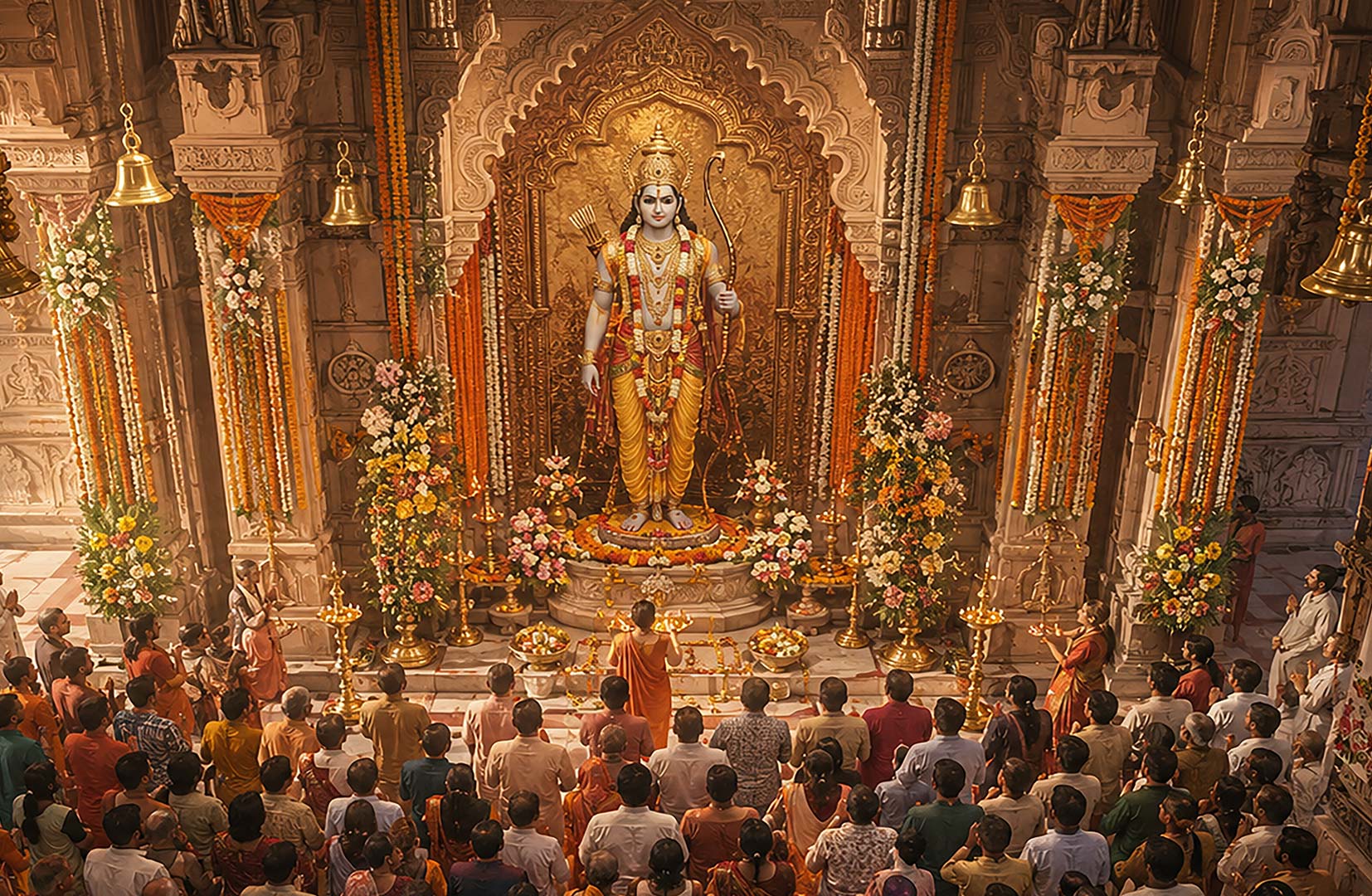
A sacred evening of Ram Katha, bhajan, and aarti. Join SwarSewa in celebrating the birth of Lord Ram with music, kirtan, and devotion.
Full event details →